Legacy Pipelines Are Costing You More Than You Think—Here's How to Finally Cut the Cord
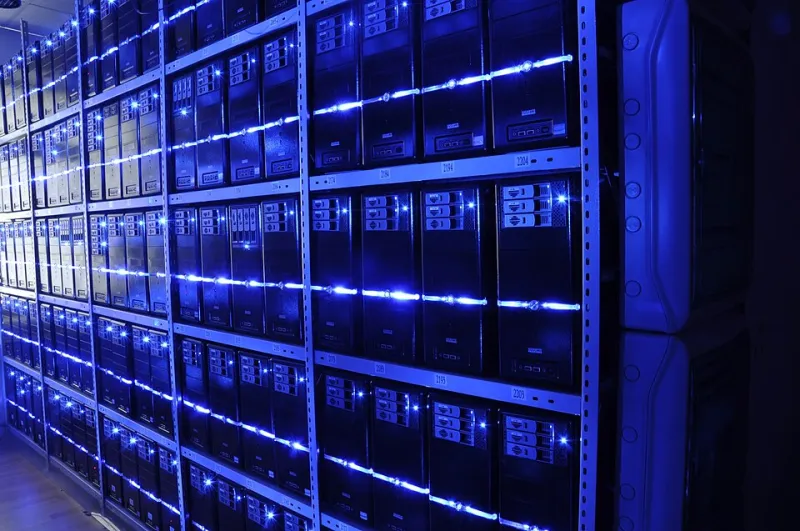
Photo: BalticServers.com, CC BY-SA 3.0, via Wikimedia Commons
There's a particular kind of organizational denial that sets in around year seven of a data warehouse's life. The system still runs. The dashboards still load—eventually. The on-call rotation knows which cron jobs to restart at 3 a.m. and in what order. Everything is fine.
Except it isn't. And somewhere in your organization, someone has a spreadsheet that proves it.
Legacy data infrastructure—the kind built when Hadoop was cutting-edge and cloud storage felt reckless—is one of the most expensive things a tech company can quietly ignore. The costs don't show up neatly on a single line item. They're distributed across engineering hours, delayed product launches, recruiting friction, and the slow accumulation of technical debt that makes every new feature feel like defusing a bomb.
This piece is about what it actually takes to modernize that infrastructure: the technical realities, the organizational landmines, and the framework for deciding whether you rebuild from scratch or carefully refactor what you've got.
The Hidden Ledger of "Good Enough"
Before you can make the case for migration internally, you have to understand what staying put actually costs. Most engineering leaders dramatically undercount this.
Obvious costs are easy: licensing fees for legacy databases, hardware refresh cycles, the dedicated ops team that exists solely to keep aging systems breathing. But the hidden costs are where the real money disappears.
Consider data latency. An on-premise pipeline that refreshes reporting data every 24 hours sounds manageable until your sales team is making decisions based on yesterday's numbers while your competitors are operating on near-real-time signals. That latency has a dollar value—it's just hard to put on a slide.
Then there's engineering opportunity cost. Senior data engineers who spend 40% of their time on maintenance, schema migrations, and firefighting legacy issues aren't building the data products that move the business forward. That's not a staffing problem—it's an infrastructure problem wearing a staffing costume.
Finally, there's talent retention. Recruiting engineers in 2025 means competing with companies running Snowflake, dbt, and Databricks. Asking someone to spend their days nursing a 10-year-old Teradata cluster is a retention risk you're probably not accounting for.
What Actually Goes Wrong During Migrations
The graveyard of failed data warehouse migrations is well-populated. Understanding the common failure modes saves you from joining it.
The Big Bang fallacy is the most common killer. Teams plan a complete cutover—old system off, new system on, done—and immediately discover that the new system doesn't account for 200 edge cases the old system handled silently over a decade. Parallel running is painful and expensive, but it's not optional.
Undocumented business logic is a close second. Legacy pipelines accumulate transformations that nobody fully understands anymore. A join condition added in 2016 to handle a specific customer's weird data format is now load-bearing infrastructure. You won't find it in the docs. You'll find it when your new pipeline produces numbers that don't match and a VP calls an emergency meeting.
Stakeholder fatigue kills migrations that are technically succeeding. These projects run long—six months to two years for serious migrations—and business stakeholders lose patience. Maintaining executive sponsorship requires consistent, translated communication: not "we migrated 40% of the DAGs" but "the marketing team's reporting will be three times faster starting next quarter."
Case in Point: When Refactoring Beats Rebuilding
A mid-sized e-commerce company in the Midwest spent 18 months planning a full migration from their on-premise Oracle data warehouse to BigQuery. Six months in, they stopped.
Not because it was failing—because their analysis revealed that roughly 70% of their pipeline's actual business value came from 15% of the codebase. The rest was historical cruft: reports nobody read, tables that fed dashboards long since replaced, transformations supporting a product line they'd discontinued.
They pivoted to a strangler fig approach: build new capabilities cloud-native, migrate the critical 15% with full validation, and let the rest sunset gracefully. Total migration time dropped from an estimated 18 months to 11. Engineering hours saved were redirected to building a real-time recommendation engine that drove measurable revenue lift.
The lesson isn't that rebuilding is always wrong. It's that the decision requires an honest audit of what your pipeline actually does versus what you think it does.
The Rebuild vs. Refactor Framework
When evaluating your own situation, work through these four dimensions:
1. Coupling density. How tangled is your existing system? If changing one table requires updating 30 downstream dependencies, refactoring is brutal. High coupling is often an argument for rebuilding with a cleaner architecture.
2. Documentation fidelity. If your pipeline's behavior is well-documented and your team genuinely understands the business logic, refactoring is viable. If institutional knowledge lives primarily in the heads of two engineers who've been there since 2013, you're one resignation away from a crisis either way—and a rebuild gives you a chance to document properly.
3. Business velocity requirements. If your organization needs to ship new data products fast, a multi-year refactor will feel like running in sand. Sometimes a clean rebuild, even with its risks, gets you to a productive state faster.
4. Cost trajectory. Model your current infrastructure costs over three and five years, including engineering time. Then model the migration cost plus the new system's operational cost. The crossover point tells you how long you have before staying put becomes the obviously irrational choice.
Starting Without Starting Over
The practical advice for teams staring down this problem: you don't have to commit to a full migration to start moving.
Begin with observability. Instrument your existing pipeline thoroughly before you touch anything. You need a baseline of what's actually running, how often, and what it costs. Tools like Great Expectations or Monte Carlo can give you data quality visibility you probably don't have today.
Then identify your migration candidates—the new data workloads that haven't been built yet. Every greenfield project from this point forward goes cloud-native. You stop adding to the legacy system and start building the replacement in parallel.
From there, you migrate backward from least critical to most critical, building confidence and organizational muscle before you touch the systems that keep the lights on.
It's not glamorous. It doesn't make for a great conference talk. But it's how migrations actually succeed—incrementally, carefully, and with a lot of validation along the way.
Your 10-year-old pipeline had a good run. It's time to let it go.